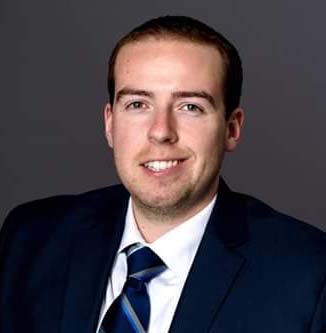
Dog Is My CoPilot (DIMC) transports animals from overcrowded shelters to adoption centers. The organization relies on the use of general aviation aircraft and is closing in on 50,000 total animals rescued, currently flying about 1,000 animals per month.

The non-profit was founded in 2012 by Peter Rork, MD, who had been a pilot since he was a teen. His parents had begun giving him a flight lesson each year starting on his 12th birthday, and four years later he soloed for the first time. Rork earned his pilot’s license before his driver’s license, due to New Jersey laws at the time.
He continued to foster a love for aviation and worked as a charter pilot performing Chesapeake Bay tours while in medical school. Rork went on to practice orthopedic surgery for three decades and has since retired, now focusing much of his attention on growing DIMC.
When he first began flying dogs, Rork was flying about 100 to 150 hours a year around the Western United States for personal reasons. His medical practice was initially in Sun Valley, Idaho, followed by Jackson, Wyoming.
“One of my patients asked if I would fly some dogs from Idaho Falls down to Denver, which was for the Golden Retriever Rescue of the Rockies (which has the fitting acronym, GRRR). I found that very rewarding,” he said.
“It was probably about seven hours of flying, and there were three dogs, so it was a very expensive way to do the transport. But for those dogs it was a game changer because they were all slated to be euthanized.”

Free time outside of his medical practice was often already spent in the cockpit, and he began transporting animals for several organizations. These efforts ultimately created DIMC as it’s known today.
The organization had a strong group of volunteer support from the beginning, and their passion for helping animals was often greater than its bank account balance. The group knew that having a larger aircraft would be the best bet at expanding their impact; they just had to find a way to make it happen.
“The very first time I had ever flown a turbine aircraft, or been in a Caravan, is when I went up to look at this airplane in Canada,” Rork explained. “We didn’t have the money for it, so I mortgaged my house and loaned the money to the organization. The first flight that we did in the Caravan, I had 251 animals on board. Suddenly, we went from flying 1,000 animals a year to 3,000.”
This initial trip, and many after it, in the Caravan was to a shelter in Merced, California, which averages about a 94% euthanasia rate. The newly acquired turboprop’s impact was substantial from the outset and today flies animals all over the country, with volunteer pilots flying DIMC’s Cessna Grand Caravans.
“I was getting burned out [being the only one flying], so I put some feelers out looking for some volunteer pilots. I found two or three guys who, if I paid for their training, would give me back 100 hours of flight time,” he said. “They weren’t in it to fly an airplane. They were in it because they wanted to save dogs. I really got fortunate to get some people who were as dedicated as I was to the whole process.”
“I really got fortunate to get some people who were as dedicated as I was to the whole process.”


As the organization grew, fundraising became increasingly important, and DIMC has been successful in creating numerous relationships, including with over 200 animal rescue groups nationwide, and is a Petco Love partner. These efforts enabled them to purchase a second aircraft in 2022, and the Caravan was an easy choice due to its cargo capacity and low operating costs. The group averages about $800 per hour to fly their PT6-powered turboprops.
“It’s about $1,500 per animal per transport [when only flying one or a few dogs in a smaller aircraft] to between $60 and $75 per animal per transport now, depending on how many we take,” Rork said.
“I was very keen from the start that I wanted to get as many animals as possible on board. But large dogs weren’t getting adopted [as often as the smaller ones], and in the Caravan we can carry 40 large crates, compared to two in the Stationair. But we have stepped back from determining what we need to fill the plane to allowing the sending and receiving groups to determine what animals they think they can adopt out.”
A month after getting the second Caravan ready for service with new avionics and a custom paint job, it was flipped over on the ramp by a tornado. The aircraft is repairable, though, according to insurance, and it is expected to return to service soon following a year and a half in the shop. After it was damaged, the group purchased a third Caravan, aptly named “The Third.” This aircraft joins ‘The Big Dog” and “The Sequel.
“There are four things that one can do: adopt, foster, volunteer, and/or donate. For every dog that you save, you save two. The animal that you save and the one that takes its place.”


The organization’s operations are nationwide, with an average mission length of about 1,000 to 1,200 nautical miles, and Rork explained that it has long been his goal to have three Caravans. These 208s are based in Lewiston, Idaho, Houston, Texas, and Hattiesburg, MS, essentially dividing the country into thirds. New routes are being opened to serve the East Coast’s demand for animal transports.
Even with the volunteer pilots’ dedication, their schedules couldn’t keep up with demand, so DIMC has since hired two full-time pilots. The group of roughly a dozen volunteer pilots provides necessary lift when the full-timers need time off. When transporting animals, the aircraft are usually wheels up at 5:00 a.m., following a lot of coordination getting the animals to the aircraft, before what is usually an eight to 12-hour day of flying with multiple stops.
Supporting DIMC’s mission has been a true labor of love for everyone involved, and Rork takes great pride in the organization’s growth over the past 14 years. It would take pages to properly recognize the hundreds of volunteers who have contributed along the way. Every donation that comes in generates an email notification for Rork, which he returns with a handwritten note of appreciation to personally thank each supporter.
“For other turbine pilots [they should know], this is not a dog problem. One is either part of the problem or part of the solution,” Rork said. “Get off the sidelines, contact your local shelter and offer your help. There are four things that one can do: adopt, foster, volunteer, and/or donate. For every dog that you save, you save two. The animal that you save and the one that takes its place.”