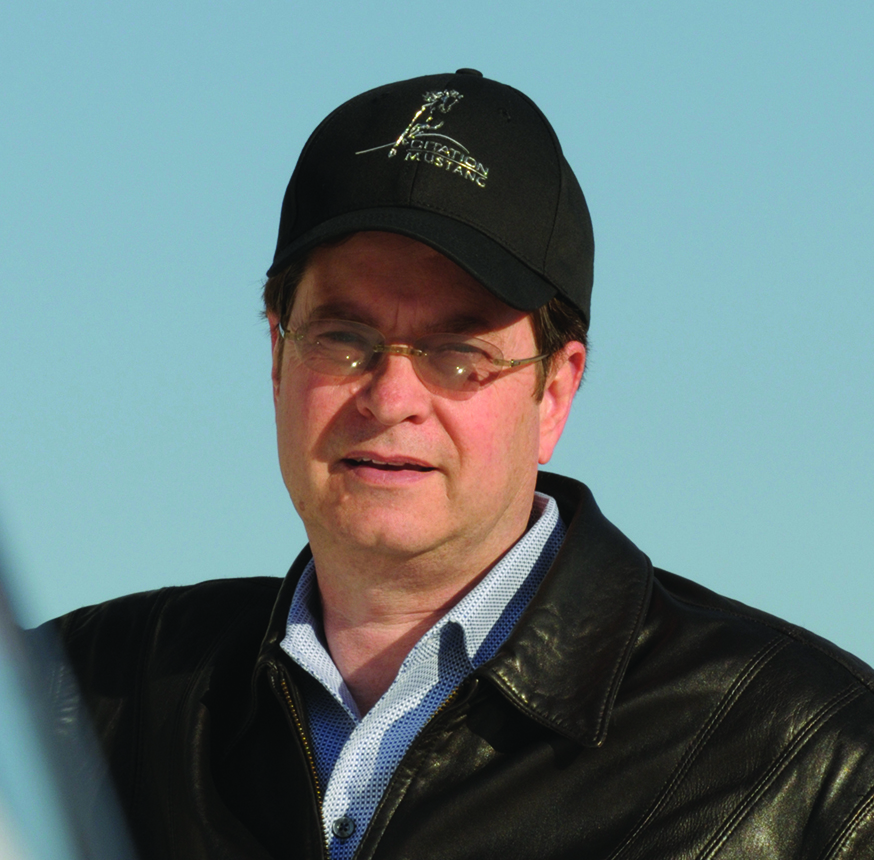
On the set with Mike Nichols and Kim Coryat of PMOPA
Let’s be honest. The safety record of light turbine aircraft is not particularly good. Too often, the evening news leads with a story full of video about a husband and wife who perished in their small airplane. Sometimes right after departure into weather. Sometimes in a snow-covered airframe right after liftoff. Sometimes on a botched missed approach.
If there is a common theme, it’s that the PIC is simply not up to the task of planning the flight, flying the airplane, or understanding what is happening with the automation.
First to notice a real need to enhance the minimum training standards mandated by the FAA was the Citation Jet Pilots group (CJP). They partnered with the Presage Group of Canada, to study decision making during the landing approach phase of a flight. Their research led to the introduction of “Safe to Land™”. It’s a comprehensive program to reduce runway excursions by providing a template for Citation pilots to use on every approach.
Other owner-pilot organizations (OPA’s) have taken note and are developing new safety initiatives as well.
The HondaJet Owners & Pilots Association (HJOPA) recently introduced their “Proficient Pilot Program” P3. One of their goals is to reduce the number of runway excursions in the fleet. HJOPA President, Tom Stacy says, “Our Safety Committee collaborated with ForeFlight, CloudAhoy, and AirSync to establish a delivery system for our Proficient Pilot Program. It provides a self-debrief and analysis of each flight that aims to significantly enhance flight safety, refine piloting skills, and cultivate a stronger, safer HondaJet community through shared knowledge and best practices.”
The Safety Foundation for Piper M-Class Owners and Pilots Association (PMOPA) recently debuted a video series. Their CEO, Mike Nichols says,” Fly It Right: The M-Class Way was created to give our community clear, real-world guidance on the safety challenges that are most relevant to them, based on past common accidents and incidents. These short vignettes aren’t just theory; they show how good decision-making and proper technique can make our pilots safer.”
Misty Stanistreet, Executive Director of the TBM Owner Pilots Association says their TBM Advanced Aviator Program (TAAP) is gaining traction. “TAAP is our commitment to raising the bar on TBM proficiency. We built it to give owners a clear path, professional training standards, and a way to measure their performance against the habits that keep people alive in this aircraft. It’s not about adding hurdles. It’s about giving pilots a framework that makes good decision making the default every time they fly.”
These safety efforts have some common pillars including:
Internal Safety Committees
Formation of Safety Foundations
Performance Monitoring
Additional training opportunities
Adherence to SOP’s
Jeff Rhodes, Chief Aviation Underwriter, for 5X5 Insurance Services LLC says the industry is impressed. “We see that the two biggest mitigators of risk for owner pilot operations are:
1) Developing and strictly adhering to a set of standard operating procedures and
2) Regular training (more than the required minimum) with a school that specializes in your type of aircraft.
These things are more important than your total flight hours or time in the aircraft, and certainly more important than your age. The owner-pilot organizations are key to supporting, developing, and holding members accountable to these SOP’s and standardized training programs. They are the experts on how to transition into, train in, and operate their aircraft. We designed our underwriting criteria around their recommendations rather than imposing our arbitrary requirements to them, as has been traditionally done.”
These efforts are a win-win for all.
Fly safe.